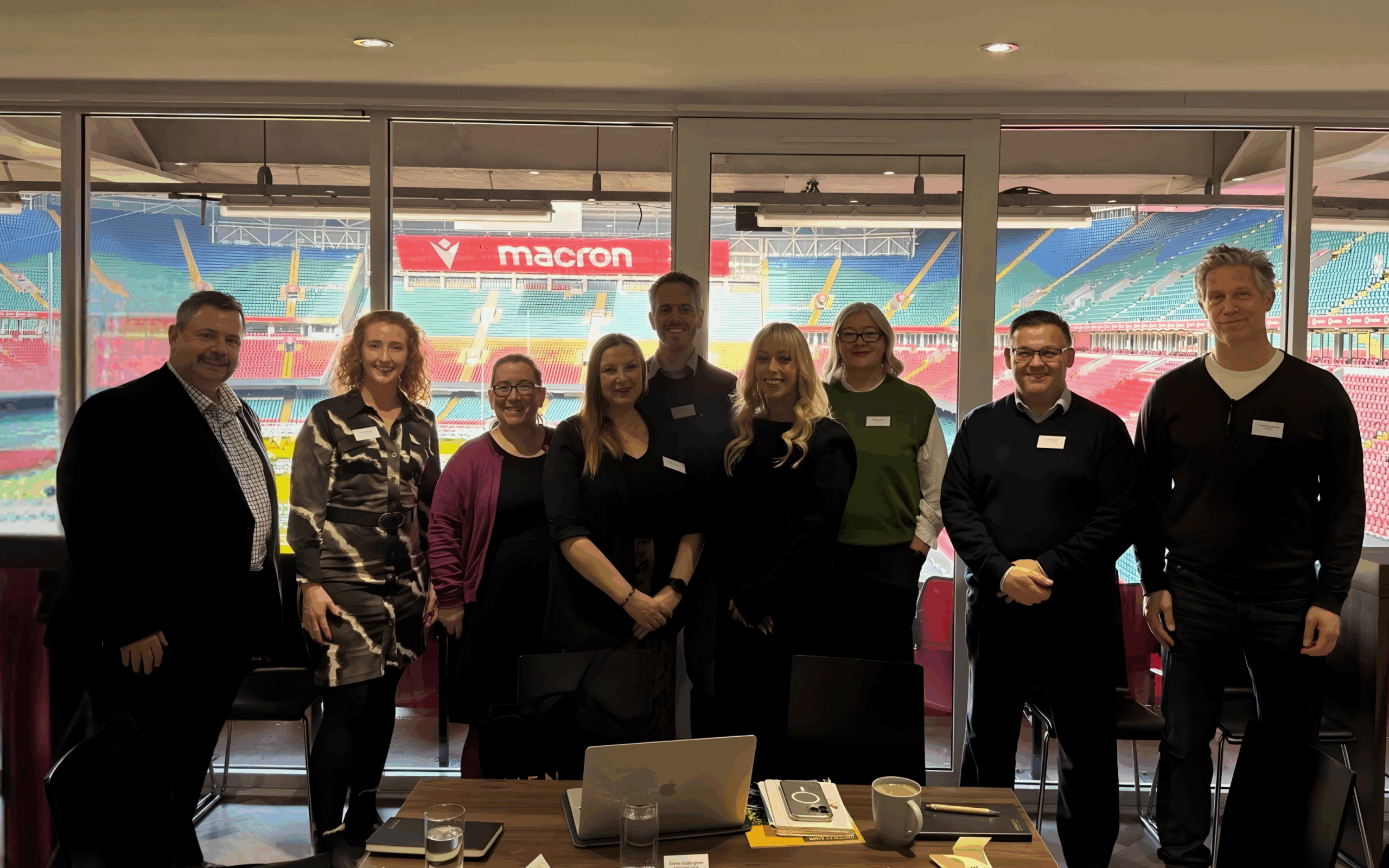

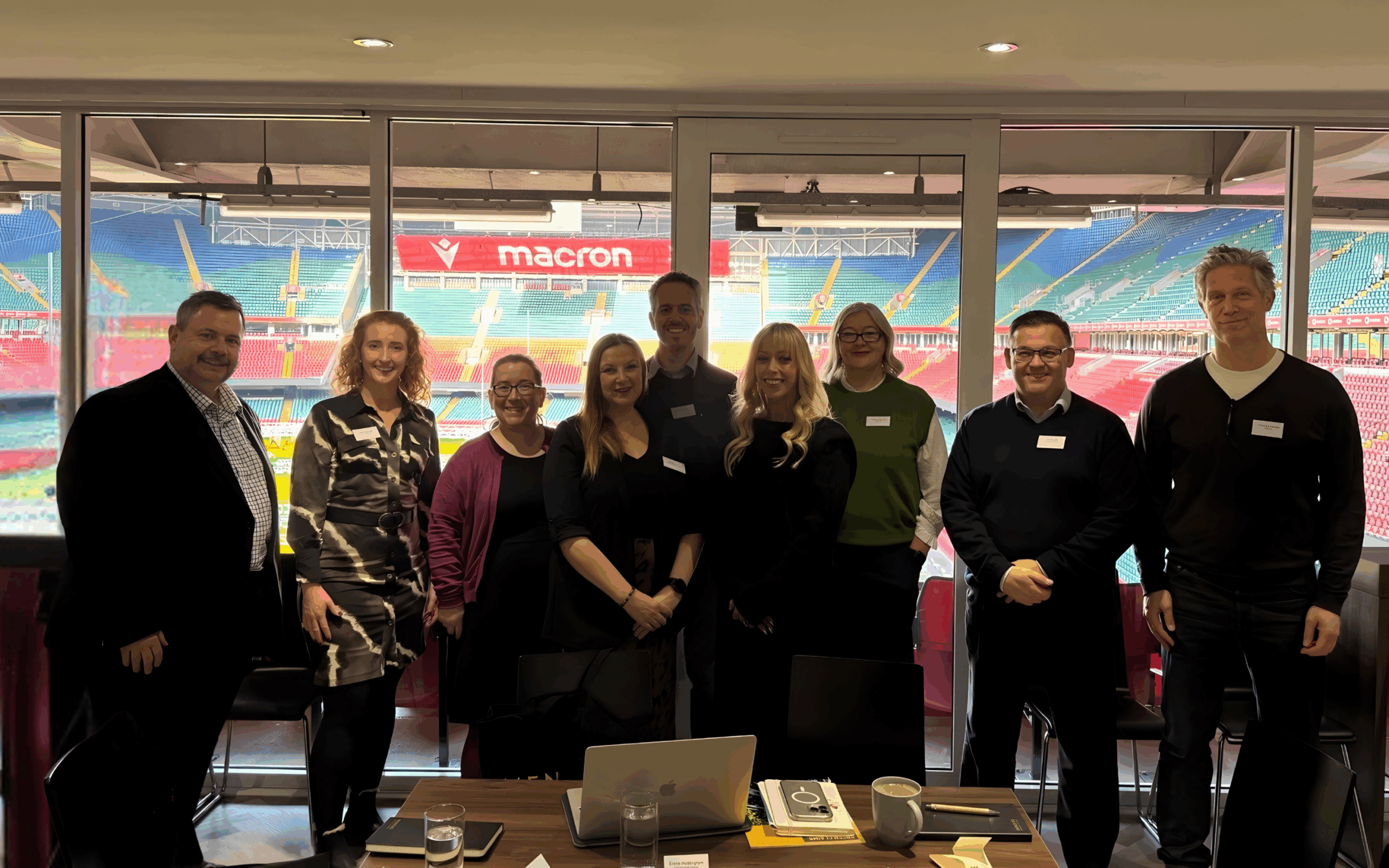
Legal News Wales recently hosted a roundtable on ESG in the legal sector, hosted in partnership with Menzies LLP, which brought together senior leaders from across the Welsh legal community to discuss one central question: how can Welsh law firms move from good intentions to credible, measurable action?
Chaired by Emma Waddingham, Editor, Legal News Wales, the session featured contributions from:
- John Cullen, Partner – Restructuring & Insolvency, Menzies (profile)
- Christoph Geppert, Director – ESG, Menzies (profile)
- Amber Harrison, Consultant – ESG, Menzies
- Huw Roffe, Partner, Acuity Law
- Amy Seppman, Marketing Director, JCP Solicitors
- Haley Evans, Marketing & Communications Manager, Harding Evans Solicitors
- Jeff Wright, Chief Experience Officer, Redkite Solicitors
- Louise Howells, Partner, Blake Morgan
What ESG really means for Welsh law firms
Asked what ESG means in practice, participants described a blend of environmental responsibility, social value, and a determination to create more diverse, representative workplaces. Much of the sector’s ESG activity is rooted in community engagement, charity work, DEI programmes and efforts to ensure workforces reflect the communities they serve.
There was, however, a shared recognition that ESG still “means different things to different people” within firms. Some practice areas embrace it naturally; others still see it as abstract or “fluffy”.
For Christoph, even the terminology shapes ambition.
“Environment, social and governance is descriptive terminology but has no ambition in it… whereas if you talk about sustainability, that’s terminology with a clear goal.”
The choice of language reveals whether firms are treating ESG as a compliance tick-box or as a framework for long-term transformation.
Governance: the hardest pillar to get right
While environmental and social initiatives are increasingly visible, the ‘G’ in ESG remains the most challenging. Firms often find governance difficult to define, measure or embed—yet it is foundational to credibility.
John noted that governance was originally intended to be the most important pillar of ESG, but has “dropped out” of many conversations. Drawing on examples from accountancy, he highlighted how integrated reporting can turn values into decision-useful, auditable information rather than marketing language.
Participants acknowledged that governance:
- Requires time away from chargeable work
- Forces questions about accountability and structure
- Needs clearer metrics and ownership
- Is essential to avoiding greenwashing and building internal trust
Amber described governance as the backbone of sustainability: the policies, procedures, training and ethical frameworks that must sit beneath any environmental or social claim.
Drivers of change: clients, talent and compliance
Pressures on firms differ depending on who they serve.
Public & corporate markets
For firms advising the public sector or large corporates, ESG is increasingly procurement-led. Tenders now demand measurable commitments on carbon, social value, DEI, net zero planning and future generations duties. Stakeholders “want to see the receipts”, not just narrative statements.
Consumer & regional markets
For high street and community-based firms, ESG’s strongest driver is trust. Clients increasingly align themselves with organisations whose values reflect their own. Several participants noted that individuals, especially younger clients, will actively reject brands they feel do not reflect their ethics.
Talent attraction & retention
Younger lawyers are now asking more about DEI, values and community impact than pay. Firms reported recruits joining because of visible LGBTQ+ engagement or social value programmes. There seems a clear shift amongst young people to ask from what can I give to the company to what the company can do for them.
Regulatory pressure
Beyond gender pay gap reporting and modern slavery requirements, participants expect ESG-related transparency—such as diversity data and governance reporting—to become increasingly mandatory.
As one participant summarised: compliance is the backstop, not the purpose.
A distinctively Welsh approach: collaboration over competition
The group highlighted that Wales has a unique environment for ESG progress:
- A notably collaborative legal community
- Deep roots in local communities, including some of the UK’s most deprived
- National legislation such as the Well-being of Future Generations Act 2015
- Stronger baseline environmental requirements, especially around recycling
John noted that Welsh businesses are often, by necessity, ahead of the ESG curve:
“By operating in Wales, you’re already pushed into strong environmental performance… I’m surprised more firms don’t use that as a baseline for their ESG story.”
Many agreed that collaboration could unlock collective solutions—particularly around supply-chain emissions, where most Welsh firms use the same suppliers. Rather than competing on sustainability, participants emphasised “raising the tide for all boats”.
This aligns with global frameworks such as the UN Sustainable Development Goals, as Amber observed: collective action amplifies influence and impact.

From activity to strategy: the power of materiality
A recurring theme was the difficulty firms face in quantifying impact. Many are doing strong work across DEI, social value and environmental responsibility, but lack a coherent framework for prioritisation.
Participants were particularly energised by materiality assessment, introduced by Amber—a core tool in sustainability reporting.
Materiality helps firms:
- Identify ESG topics that matter most to clients, staff and other stakeholders
- Map risks and opportunities, including financial ones
- Focus resources on high-impact areas
- Build an evidence base for boards and risk registers
- Establish a baseline for future reporting and assurance
- Explore double materiality to explore not just the risk and opportunities for the company but also the positive and negative impact that the company has on the environment and society
Jeff added that, based on his experience in a previous role, materiality unexpectedly elevated governance issues that board members already cared about, increasing buy-in.
Amber advocated for simple board dashboards—red/amber/green reporting on key ESG areas—to keep sustainability “fresh in the mind” of leadership.
Who owns ESG inside a law firm?
For most mid-sized Welsh firms, ESG leadership is not a full-time role. Instead:
- Marketing and HR teams often coordinate ESG messaging, tenders and culture
- Finance, procurement, IT and facilities hold critical operational data
- Passionate individuals frequently become de facto ESG champions
Amber warned against siloing responsibility:
“Gather what you’ve got under sustainability and look at it through a slightly different lens – and then talk about it. Celebrate it… and rethink the language you use.”
Christoph added a critical caveat:
“Responsibility must come with protected time and resources, otherwise it becomes a burden rather than the joy of doing it.”
Greenwashing, ‘greenhushing’ & the language problem
Participants acknowledged a growing tension in ESG communication:
- Law firms are often confident using polished ESG language without strong evidence
- Websites frequently include claims that stray into greenwashing
- Fear of scrutiny is now causing some firms to say too little — ‘greenhushing’
John warned that greenwashing is now a significant fraud risk in the UK and is receiving increasing regulatory attention.
The message from all three Menzies specialists was clear:
- Be honest about the journey
- Use specific, evidence-based language
- Stop hiding strong work in CSR subpages
- Avoid generic superlatives and empty claims
Authenticity and transparency were identified as essential to long-term credibility.
Risk, resilience & the future of ESG in Wales
In closing, participants discussed ESG not just as a values framework, but as a risk-management imperative. ESG now sits at the heart of:
- Protecting access to key markets and tenders
- Managing regulatory, climate and supply-chain risks
- Attracting and retaining the next generation of talent
- Ensuring long-term financial sustainability
John reminded the group that even reputable clients can become embroiled in scandal, making strong internal governance and ethical lines essential.
Christoph encouraged firms to use tools such as the World Economic Forum’s Global Risks Report and the World Bank’s carbon pricing insights to understand the macro trends shaping clients’ challenges — and, therefore, the advice they will increasingly expect from their lawyers.
From intent to influence
The session closed with a collective recognition that those present are not just ESG enthusiasts but influencers — in their firms, networks and the wider Welsh profession – and to ensure that influencing and initiatives come with what Amber said are: “Credibility and authenticity – two key words for sustainability.”
Our guests made it clear there is a strong appetite across law firms to:
- Share tools such as materiality assessments
- Develop training on ESG language, governance and risk
- Continue collaboration through networks and events
Welsh law firms are already doing significant work across community, DEI, environment and future generations. The challenge — and opportunity — now is to knit those efforts into a coherent, evidenced and confidently told story, both within firms and across the sector.
Specialist ESG advice for law firms – Free Download
For further guidance and also information on measuring ESG within your law firm, download Menzies’ ESG report:
‘How ESG Assurance Can Prevent Brand Damage’, here.